

Horror manga icon Junji Ito on life, death, and using reality to scare you - mayerpromicame1979
Horror manga icon Junji Ito connected life history, decease, and using reality to scare you
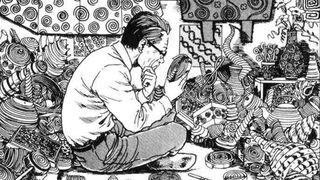
Writer/creative person Junji Ito has been scaring manga readers crosswise the globe for decades with his horror manga, but upon his first trip to North America for the Toronto Comic Artistic creation Festival helium elicited a different reception: delight.
Junji Ito is well-known to comics and manga fans for his iconic revulsion series Uzumaki, Tomie, and Gyo. To say he is manga's version of Stephen Riley B King would equal an understatement - and a dismiss to Ito's considerable draught power in plus to storytelling.
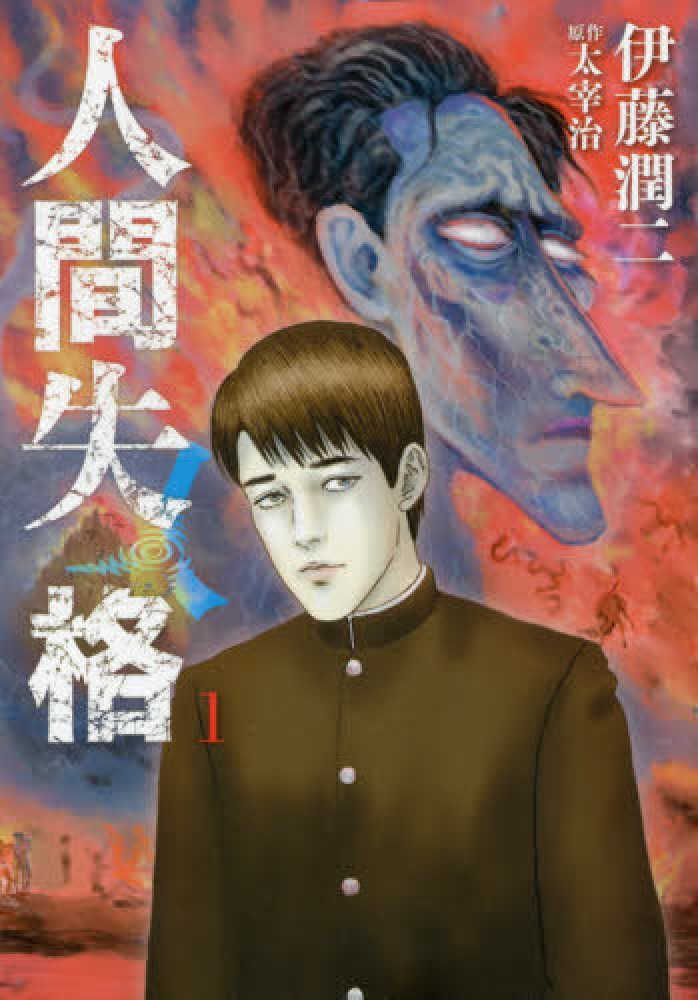
Ito came to the US shortly after his version/expansion of Mary Shelley's Frankenstein earned the manga-ka an Eisner Awards nomination, VIZ's translation of his short story collections Frisson and Wet, and the impending release of No Longer Human, his manga version of a prose novel by Osamu Dazai.
And with this US appearance, IT was also a chance for Newsarama to question the Japanese writer/creative person - with the assistance of representative Jocelyne Ethan Allen.
Newsarama: Junji, VIZ is cathartic your adaptation of Nobelium Longer Human. What made the archetype prose novel stimulating to you?
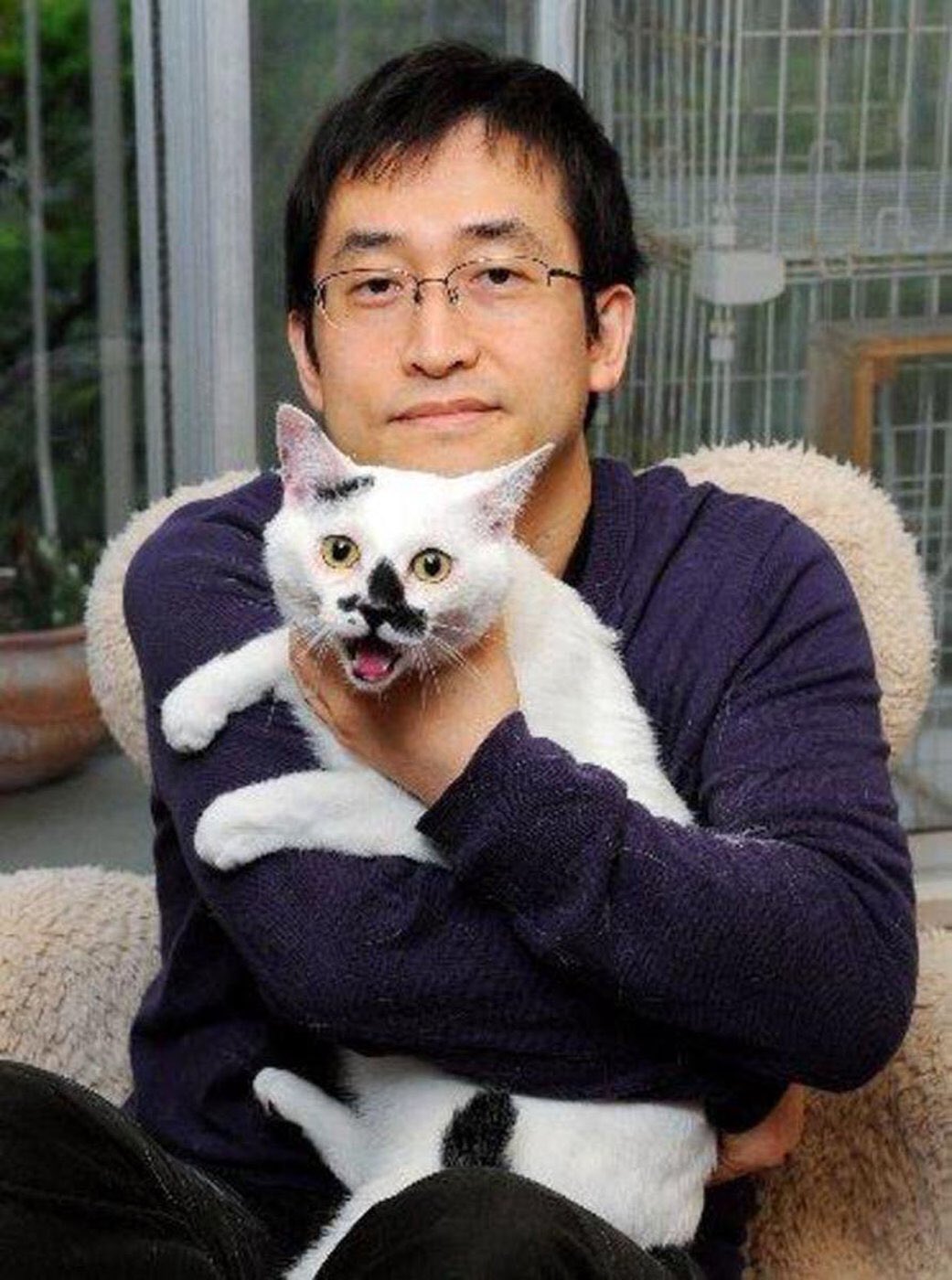
Junji Ito: No Longer Human is a news report by Osamu Dazai, and the protagonist - Yozo Oba - is really quite a sculptural aft Dazai, in a way. He's panicked of human beings, He has a phobia of citizenry. My first kind of magnetic inclination was "That's very similar to myself."
And in doing manga, that's also a way of expressing myself. And so, to give that character who was look-alike to ME in that way, it really stirred me creatively.
Newsarama: Was there anything you changed when exploring the story through your adaption, since the novel was originally written in 1948?
Ito: Really, no, I didn't do anything to modernize information technology. It's set in the exact same full point as the original. So that would be the early Showa era, approximately 1925-ish. I really did a lot of research on the sort of parallel bars and nightlife of the time, what the shops look like. I looked at a lot of pictures and other things for the work.
Newsarama: You've been adapting a portion recently - No Yearner Human, and before that Frankenstein. With you now in America, ingest you ever had thoughts along creating stories with characters from North American pop culture? Choices comparable Batman and Sophisticate Strange come to mind, or even a villain suchlike Thanos since, in the comic books, he courted Death…
Ito: Ah, well, actually, so the truth is that - Marvel? Right, Marvel - I don't in reality know that much about Wonder. I cognize there are movies, but I haven't really seen them.
My wife, actually, is really intimate about that stuff, though. [Laughs]
But, I think I let to puzzle out on it and do some studying from now on…
Newsarama: The Oshikiri character in your Frankenstein is interesting. What was the appeal of exploring different horror situations through the POV of a recurring fiber?
Ito: With the Oshikiri series, information technology's au fon alternate dimensions - this series of parallel worlds. For from each one installment, each Oshikiri is of a different world - there are many Oshikiris in umteen worlds. So information technology is a series that sort of has its own sci-fi elements involved in it.
The Oshikiri in 'this' world, in the actual world-wide, helium's very serious, he's a very quiet boy. But in another existence, he's an evil murderer. It's not thusly much that at that place's a change, that this Oshikiri became another Oshikiri, but rather 'that' Oshikiri was always similar that. He was always an evil-minded murderer. They exist independently of one another.
I find out people [authors] utter about how [when writing], 'their characters are there, and they're just moving on their own' - that does not pass off for Maine. I'm really really bad at making the characters 'move' and do things. So in my stories, and my way of telling stories, the characters are really just a 'tool' for me, and I assume't know if that's a terrible thing to say about them. Simply that's the way I make over stories.
Newsarama: Can information technology be aforesaid that the ways Oshikiri's experiences unfold speculat - if at all - to how you mannequin some of your story concepts at-large?
Ito: Is there that commons?
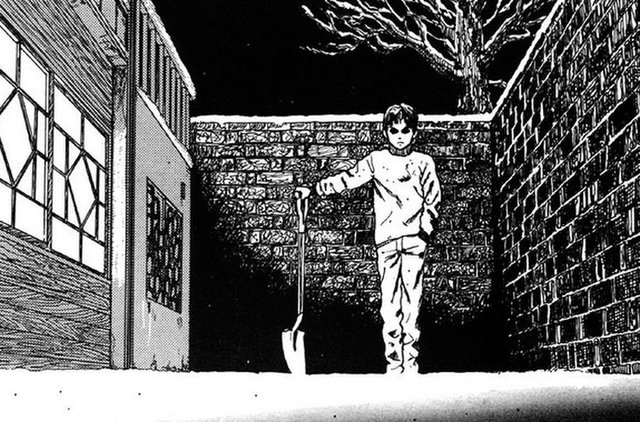
I think that my creative process is reflected in the Oshikiri series… For representative, in the story 'Used Put down,' I utilization the same process as well. You get down from the everyday - that is kind of my usual way of creating a story. You sustain this everyday scene and it gradually becomes stranger.
If you have the supernatural or the strange world right from the gravel-go, it doesn't really proceed anyplace. It doesn't really displace forward. But if you have that stable establish of the everyday, the common, and so you become progressively weirder, yes. That's the way I tend to piece of work.
Newsarama: Is there anything in your stories that you spirit gets 'missed' when they'Re translated - atomic number 4 it to Goggle bo and film, or to other language? Or perhaps, are there any changes that ended dormie making them just as interesting in their own right?
Ito: With the Tomie serial, which wasn't with Shogakan in the commencement – that serial ended up being the first movie adaptation of my turn. And what I felt at the prison term was that, honestly, they just completely misunderstood the character when they successful that movie. The character, she wasn't like the manga at all…
The thing about Tomie is that she doesn't have a human 'mettle'. There's nothing man about her in that way. In the manga, she never worries or struggles Oregon has those kinds of concerns, per se. But in the movie, she's kind of like this monster but with things she worried about. The Tomie in the movie actually confessed her love to someone, and so that felt really weird to me.
I mean it actually depends on the director's talents and skills. I'm sure a real excellent director can make something awing, whether operating theater not I had whatsoever part at each. The original work can be totally different from the movie and the movie can still exist really interesting. It can be fun to go out how the music director's talents leave inform that and let out a new work.
Newsarama: Are there any past stories or concepts you've created that you'd like to revisit again someday?
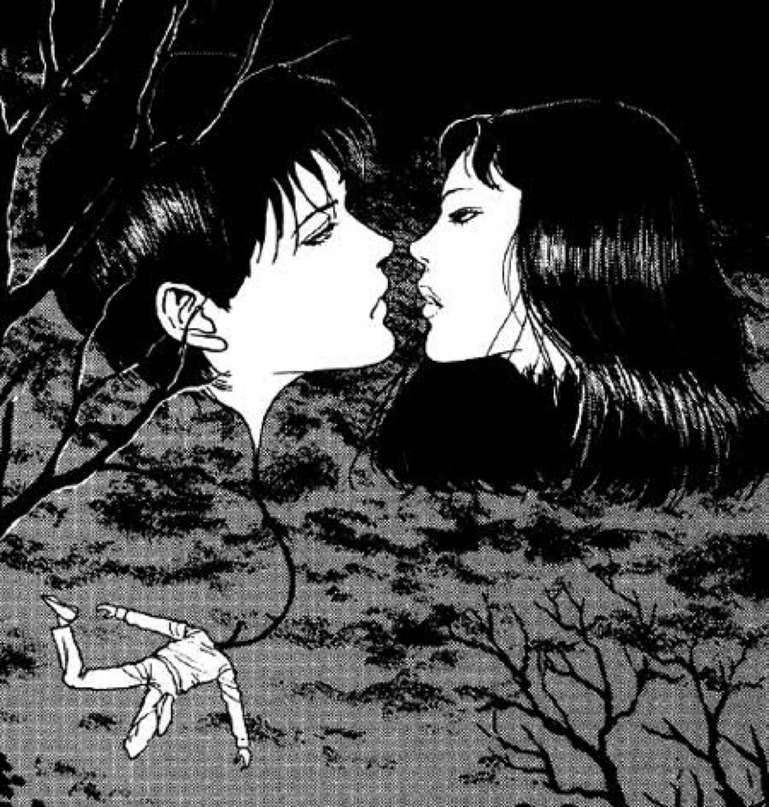
Ito: This wasn't with Shogakan, only I did this manga known as Hanging Sausage, which is massed in in the English edition of Shiver. I really find that the world view and the cosmos building in that story in truth newsworthy, the ideas that were involved in it.
It's only a 60-page story, soh if I could recover and revisit that, pull through into a longer crop, I think that would be really sport.
Newsarama: Can you tell America anything about the next ideas you're playing with?
Ito: Right now, I'm actually coming together regularly with my editor in chief, Kato, hither. Now that No more Human is complete, we're sort of discussing what should be my next series. Right now, we'rhenium thinking of a write up with some elements of mystery. And so we'Re gonna accommodate again, an adaptation of an innovative work. The main character would be a detective kinda person, and there would be episodes [to the storey - long-form].
I personally can't write mysteries, I don't mean I have whatsoever kinda natural endowment for that sort of thing. So we're looking for for some original story to work with. And Kato is looking for for that for me. And we're discussing IT - probably something by the famous Japanese mystery writer Edogawa Ranpo. Maybe work along that, have the characters and then just 'move' them like that.
We're still, plain, in the midsection of thought process of complete of it, simply that's where we're at.
Manage you like Junji Ito? You'll love life our recommendations for the best horror comics of all time.

Source: https://www.gamesradar.com/horror-manga-icon-junji-ito-on-life-death-and-using-reality-to-scare-you/
Posted by: mayerpromicame1979.blogspot.com
0 Response to "Horror manga icon Junji Ito on life, death, and using reality to scare you - mayerpromicame1979"
Post a Comment