

How To Get To Network Connections In Windows Xp
The following steps show how to configure your network connection on a Windows 10 system:
-
Click the Start icon (or printing the Start button on the keyboard), and and then tap or click Settings.
-
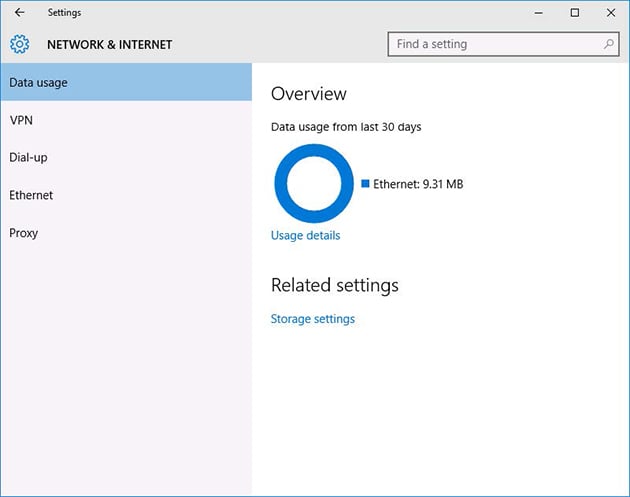
Click Network & Cyberspace.
The Network and Internet page appears, equally testify in the figure below.
-
Click Ethernet.
-
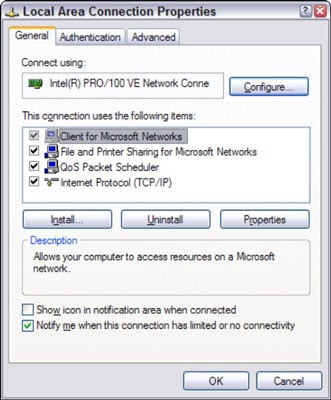
Click Change Adapter Options. The Network Connections folio appears, as shown in the figure below.
-
Correct-click the connection that you want to configure and so cull Properties from the contextual menu that appears.
This action opens the Ethernet Properties dialog box. This dialog box has seven tabs that let y'all configure the adapter:
-
Full general: This tab shows bones information near the NIC, such as the device blazon and status. For example, the device shown is an Intel Pro 100 network interface.
-
Avant-garde: From this tab, y'all can fix a variety of device-specific parameters that bear on the operation of the NIC. In nearly cases, you should leave the options on this tab solitary.
- About: Displays information about the device's patent protection
-
Driver: This tab displays information most the device driver that's bound to the NIC and lets you update the commuter to a newer version, ringlet back the driver to a previously working version, or uninstall the driver.
-
Details: With this tab, you can audit various properties of the adapter, such every bit the engagement and version of the device driver. To view the setting of a particular holding, select the property name from the drop-downwardly listing.
-
Events: Lists recent events that have been logged for the device
-
Power Management: Lets you configure ability management options for the device
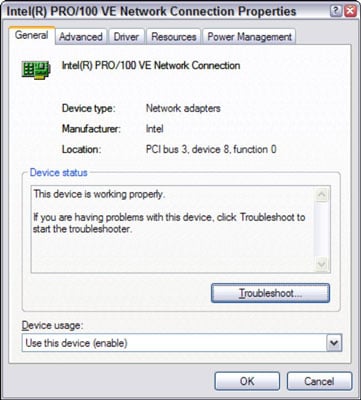
When yous click OK to dismiss the network adapter's Properties dialog box, the network connection's Properties dialog box closes and yous're returned to the Network Connections folio. Right-click the network adapter and choose Properties over again to continue the process.
-
-
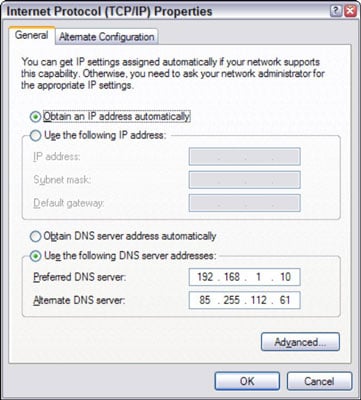
To configure TCP/IP settings, click Internet Protocol Version 4 (TCP/IPv4) and then click Properties to display the TCP/IP Backdrop dialog box. Adjust the settings and so click OK.
The TCP/IP Properties dialog box lets you choose among these options:
-
Obtain an IP Address Automatically: Cull this choice if your network has a DHCP server that assigns IP addresses automatically. Choosing this option dramatically simplifies administering TCP/IP on your network.
-
Use the Following IP Address: If your computer must have a specific IP address, choose this option and then type the computer's IP address, subnet mask, and default gateway accost.
-
Obtain DNS Server Address Automatically: The DHCP server tin can also provide the address of the Domain Name System (DNS) server that the figurer should use. Cull this selection if your network has a DHCP server.
-
Apply the Following DNS Server Addresses: Choose this pick if a DNS server isn't available. Then type the IP addresses of the primary and secondary DNS servers.
-
About This Article
This article can exist found in the category:
- Full general (Networking) ,
Source: https://www.dummies.com/article/technology/information-technology/networking/general-networking/network-connection-configuration-windows-xp-164963/
Posted by: mayerpromicame1979.blogspot.com
0 Response to "How To Get To Network Connections In Windows Xp"
Post a Comment